Warehouse Fire Safety & Electrical Compliance: A Guide for Victorian Logistics Hubs
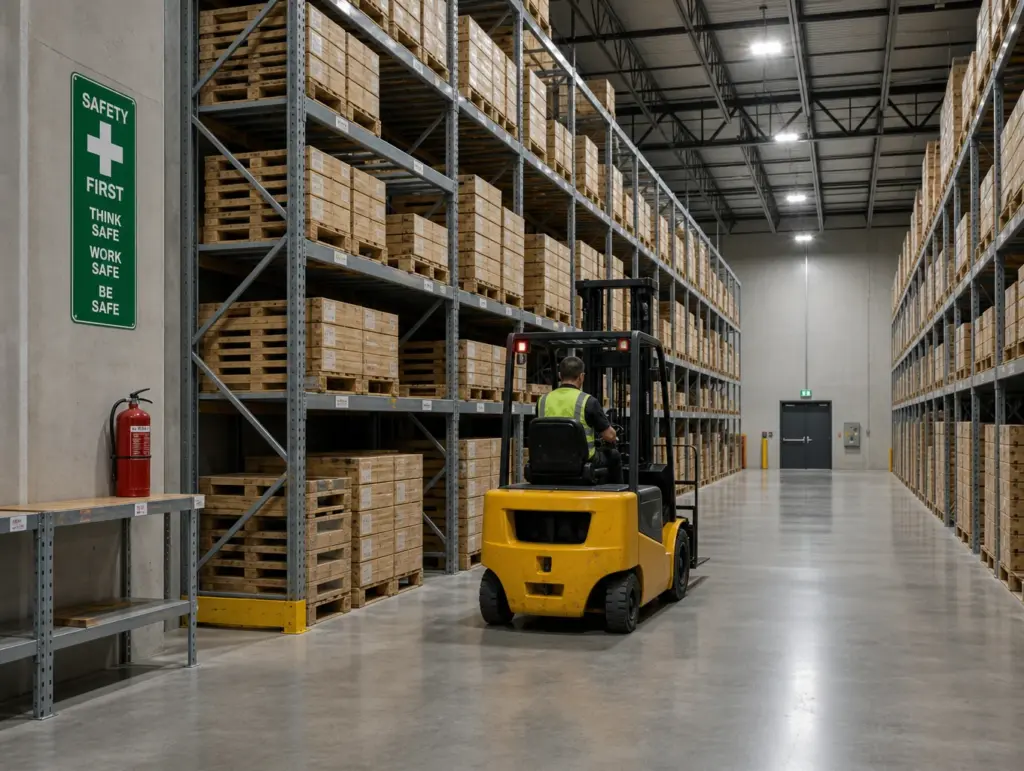
Warehouse fire safety and electrical compliance is now a core operating requirement for every Victorian logistics hub, not a box to tick once a year. If you manage a warehouse, run a distribution centre or coordinate freight, one failed extinguisher or one faulty charger can stop a whole shift. This guide shows facility managers and logistics coordinators what AS 1851 and AS/NZS 3760 expect from a busy site, and how to meet them without slowing your dock.
The Unique Fire & Electrical Risks in Warehousing and Logistics
A warehouse packs a lot of fuel and a lot of electrical load into one open space. Fire spreads fast through tall racking, and the equipment that keeps stock moving runs hard all day.
The main fire risks on a logistics site include:
- Cardboard and packaging. Cartons, shrink wrap and void fill ignite quickly and burn hot.
- Timber pallet storage. Stacked pallets feed a fire and make it hard to reach.
- Flammable goods. Aerosols, batteries and chemicals raise the risk in mixed-stock facilities.
- Blocked access. Stock left near extinguishers, exits and fire doors slows the response.
The electrical loads are just as demanding. Most sites run these around the clock:
- Conveyor belts with motors, sensors and control panels.
- Packing stations with power tools, label printers, scanners and heat sealers.
- Battery chargers for forklifts, pallet jacks and scanners, often charging in bulk.
- Extension leads and power boards that get dragged, crushed and overloaded.
Put these together and you get a site where a damaged lead near a pallet stack is a real ignition source. Regular testing is how you find that lead before it finds your stock.
Key AS 1851 & AS/NZS 3760 Requirements for Distribution Centers
Two standards sit at the centre of warehouse compliance in Victoria. AS 1851 covers the routine servicing of fire protection equipment, including extinguishers, fire blankets and hose reels. AS/NZS 3760 covers the in-service inspection and testing of electrical equipment, which is what test and tag delivers. For large sites, AS 1851 warehouse testing also feeds your Essential Safety Measures records, so auditors and insurers see one consistent set of paperwork.
Under both standards, you need to do four things:
- Inspect and test on the schedule that matches your site's risk.
- Tag every item and record the result in a logbook or register.
- Fix or remove anything that fails.
- Keep the records ready for an audit, an insurer or a landlord.
Navigating High-Bay Emergency Lighting & Extinguisher Clearances
High-bay buildings make emergency lighting harder. Fittings are mounted far above the floor, aisles run between tall racks, and stock changes the light paths every week. Exit and emergency lights need a regular test, usually every six months, including a discharge test that proves the batteries last during a power failure. Dust, heat and flat batteries are the most common faults in warehouses.
Extinguisher placement matters just as much. Under AS 1851, every unit needs a routine service about every six months, a visible tag and a logbook entry. In practice, you should also check these points:
- Keep a clear path to each extinguisher at all times.
- Do not let pallets or trolleys block the signage or the unit.
- Mount units at the correct height and in the correct position as racking layouts change.
- Match the extinguisher type to the hazard, such as electrical areas and charging bays.
Our fire extinguisher testing and exit and emergency lighting testing services cover both in one visit.
High-Volume RCD, Forklift Charger, and Appliance Testing
A warehouse can hold hundreds of leads, tools and chargers. That is why test and tag for distribution centers needs a plan, not a one-off sweep. AS/NZS 3760 ties test frequency to the environment. Warehouses and factories are usually tested every 12 months, and harsher areas need it more often.
Focus on the items that take the most punishment:
- Forklift and pallet jack chargers. Check leads, plugs and casings for heat damage and wear.
- RCDs and safety switches. Push-button test them regularly and have each one fully tested on its due date.
- Portable power tools and packing station equipment. Test them and tag them with the next due date.
- Extension leads and power boards. Replace any with cracked insulation or loose pins.
A qualified technician can work through a large site in zones, so teams keep picking and packing. Our electrical test and tag service is built for exactly this kind of volume.
How Routine Compliance Prevents Costly Supply Chain Downtime
In logistics, time is the product. A stop-work notice, a failed audit or a fire can freeze dispatch and break service agreements with your customers. Routine testing keeps you ahead of those events.
- Fewer surprises. You find faulty equipment on your schedule, not in the middle of peak season.
- Faster audits. Current tags and logbooks mean an inspector spends minutes, not days.
- Stronger insurance position. Clean records protect claims when something does go wrong.
- Protected stock and people. Working extinguishers, lighting and tested equipment limit damage and get staff out safely.
These standards matter most for high-volume hubs. Logistics electrical compliance Melbourne operators know it well, and the same pressure applies in Truganina, Laverton North, Dandenong South and Campbellfield, where large distribution sites run close to capacity. See our service areas and our industrial and warehouse fire safety testing page for how we support these precincts.
Securing your site should never disrupt your operations. Safety First Fire Safety plans visits around your shifts, tests zone by zone and hands you audit-ready records the same day. Your team keeps moving freight while we keep your site compliant.
Schedule Your Warehouse Compliance Audit
Essential Practices for Effective Warehouse Fire Safety
Commitment to warehouse fire safety can lead to higher employee morale and productivity.
Warehouse fire safety standards are essential for maintaining insurance coverage and reducing premiums.
Implementing fire drills related to warehouse fire safety procedures can save lives.
Engaging employees in warehouse fire safety discussions fosters a culture of safety awareness.
Investing in warehouse fire safety infrastructure is a proactive approach to risk management.
Monitoring compliance with warehouse fire safety regulations can enhance operational resilience.
Effective communication regarding warehouse fire safety protocols is vital for team success.
Adopting best practices in warehouse fire safety can mitigate risks associated with flammable materials.
Every logistics operator should prioritize warehouse fire safety to safeguard assets and personnel.
Incorporating technology in warehouse fire safety can streamline compliance processes.
Regular training on warehouse fire safety is essential for all staff to ensure preparedness.
Implementing robust warehouse fire safety measures can significantly enhance operational efficiency.
Understanding warehouse fire safety is crucial for every logistics hub, as it helps prevent devastating incidents.