The Complete Guide to Fire Safety and Electrical Test & Tag Compliance in Victoria
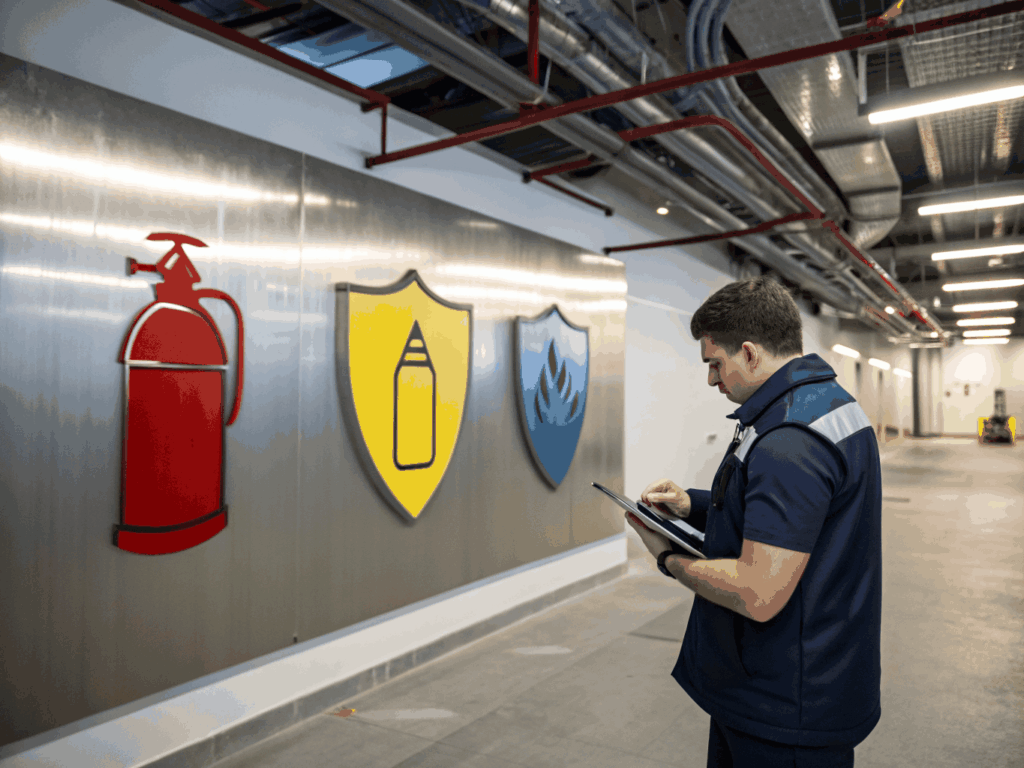
Fire safety and electrical test and tag compliance belong on the same checklist for every Victorian business. If you manage a warehouse, a factory, an office block or a commercial kitchen, two sets of rules apply to you every year: AS 1851 for fire protection equipment and AS/NZS 3760 for electrical equipment. Miss either one and you risk fines, voided insurance and, worse, an injury on your site. This guide explains what each standard asks of you, how often, and how to manage both in one visit.
Why Combining Fire Safety and Electrical Test and Tag Matters
Faulty electrical equipment is one of the most common causes of workplace fires. A damaged power lead, an overloaded board or a failed safety switch can start a fire in minutes. Working fire extinguishers and emergency lighting are what limit the damage and get people out safely. The two systems protect against the same risk from different angles.
Booking them together makes practical sense:
- One site visit. Less disruption to your team, your stock and your customers.
- One compliance calendar. Fire equipment checks and electrical tests fall due on schedules you can line up and track.
- One set of records. Tags, service labels and logbook entries are ready when an auditor, insurer or inspector asks.
- One accountable provider. You deal with a single team when something fails and needs fixing.
For facility managers, this removes the guesswork. For business owners, it turns two overdue jobs into one scheduled task.
Understanding Your AS 1851 and AS/NZS 3760 Obligations
Both standards set out how equipment must be inspected, tested and recorded. Neither is optional if you want to show you meet your duty of care. Under Victorian workplace safety law, employers must provide a safe workplace, and a documented testing regime is the clearest evidence that you do.
AS 1851 covers the routine service of fire protection systems and equipment. It is the standard behind your Essential Safety Measures (ESM) maintenance in Victoria, and it drives the AS 1851 fire compliance records that building surveyors and councils expect to see. AS/NZS 3760 covers the in-service safety inspection and testing of electrical equipment. That is what a test and tag visit delivers. Together they form the backbone of Victorian workplace safety for most commercial sites.
Whatever the audit, expect to be asked for the same things:
- Current service tags on every extinguisher and a signed logbook.
- Test dates and results for emergency and exit lighting.
- A register of electrical equipment, with tag dates and next-test dates.
- Proof that defects were fixed or the item was removed from service.
Fire Extinguisher & Emergency Lighting Requirements
Under AS 1851, portable fire extinguishers need regular inspection and servicing by a competent person. In practice, that means:
- A routine service every six months, checking pressure, seals, hoses, signage and mounting.
- Periodic pressure testing at longer intervals, typically every five years, depending on the extinguisher type.
- A service tag on every unit and an up-to-date logbook entry.
- Immediate repair or replacement of any unit that fails.
Exit and emergency lighting follows a similar rhythm. Emergency lighting is tested to AS/NZS 2293.2, usually every six months, including a discharge test that proves the batteries last long enough during a power failure. Flat batteries and failed lamps are among the most common faults. Learn more about our fire extinguisher testing and exit and emergency lighting testing services.
RCD and Appliance Testing Frequencies
AS/NZS 3760 electrical testing links test frequency to the risk of the environment. The more likely equipment is to be knocked, flexed or exposed to moisture, the more often it needs testing. As a guide:
- Construction and demolition sites: every three months.
- Factories, workshops and warehouses: usually every 12 months.
- Wet or harsh areas, such as commercial kitchens: often every 6 to 12 months, depending on risk.
- Offices and other low-risk settings: up to every five years.
Residual current devices (RCDs) need extra attention. Portable RCDs should be push-button tested regularly by the user. Every RCD also needs a full operating-time test with a calibrated tester on its scheduled test date. A tag only proves a test happened on a given day, so keep your equipment register current. Our electrical test and tag service covers appliances, leads and RCDs in one visit.
Intervals are a guide, not a guarantee. A short risk assessment of your site confirms the right schedule for each type of equipment.
The Risks of Ignoring Commercial Compliance
Skipping tests saves little and costs a lot. The risks stack up quickly:
- Injury and fire. Untested equipment fails when you need it most.
- Fines and enforcement. Breaches of Victorian OHS and building rules can bring penalties, improvement notices and prosecution.
- Insurance trouble. An insurer can question or reject a claim when your maintenance records have gaps.
- Failed audits. Missing logbooks and expired tags show up fast in an ESM audit or a tenant's due diligence.
- Downtime. A fire or a stop-work notice can shut a site for days or weeks.
Most of these outcomes are avoidable. Regular testing costs far less than a single incident.
Staying compliant is simpler than most Victorian business owners expect. Put your fire equipment and your electrical tests on one schedule, keep clean records and fix defects fast. Safety First Fire Safety services Melbourne, Wyndham Vale, Geelong and surrounding areas with experienced technicians who handle AS 1851 and AS/NZS 3760 together. Book your compliance audit today and we will confirm what your site needs, test it and give you the paperwork to prove it.
Fire safety and electrical test and tag practices are vital for safeguarding employees.
Adhering to fire safety and electrical test and tag standards mitigates risks significantly.
Engaging with professionals for fire safety and electrical test and tag ensures compliance.
Integrating fire safety and electrical test and tag processes can streamline operations.
Fire safety and electrical test and tag measures should be part of your emergency response plan.
The intersection of fire safety and electrical test and tag regulations requires careful attention.
Assessing fire safety and electrical test and tag compliance should be routine for all businesses.
Incorporating fire safety and electrical test and tag into training can enhance awareness.
Your fire safety and electrical test and tag plans should be clearly documented.
Regular fire safety and electrical test and tag checks are essential for compliance.
Implementing fire safety and electrical test and tag procedures helps prevent workplace incidents.
Understanding fire safety and electrical test and tag is crucial in maintaining a safe work environment.